
The IntakeOps Manifesto
Your company has a data graveyard. Every company does.
Eight years of Jira tickets. Thousands of Confluence pages. Incident logs, workaround threads, closed tickets with no resolution notes. The entire history of every problem your team has ever solved — buried, unsearchable, effectively lost.
This is Operational Knowledge Decay. And it compounds every quarter.
As experienced engineers move on, undocumented expertise leaves with them. As ticket volumes grow, the signal-to-noise ratio drops. As AI tools multiply across your stack, the same fragmentation repeats at scale — faster, and across more systems simultaneously.
The result is three compounding dysfunctions:
Expert Bottlenecks. Your senior engineers spend their time firefighting and answering questions that were already answered — somewhere, by someone, years ago. They can’t innovate because they’re keeping the lights on.
Institutional Amnesia. Your team re-solves the same problems repeatedly because the solutions are buried and inaccessible. Every new hire starts from scratch. Every incident investigation rebuilds context that already exists.
Failed AI Initiatives. A chatbot built on a data graveyard is just a faster way to get wrong answers. Generic AI tools assume clean, structured data. Operational reality is messy tickets, informal workarounds, and tribal knowledge that was never written down.
In high-stakes industrial environments, this isn’t a productivity problem. Production downtime at scale costs millions per hour. The inability to find the right answer, right now, has a measurable price.

Why existing approaches fail
The first generation of enterprise AI tried to solve this with better search and bigger models. It hasn’t worked — not because the models are weak, but because the foundation is broken.
You cannot build reliable intelligence on unstructured chaos. Retrieval on top of a data graveyard retrieves graveyard content. The problem isn’t the model sitting on top. It’s the decade of operational history sitting underneath — unstructured, unlabeled, and unlearned from.
The tools most teams reach for — document search, generic chatbots, off-the-shelf copilots — are built for clean data. They work in demos. They fail in production, where the knowledge that actually matters lives in old tickets, closed issues, and the heads of people who may no longer work there.
Architecture matters more than model size. This is the belief we’ve built on.
What we believe
Operational intelligence should be built from the data that already exists — not the data someone had time to document. The 80% of operational knowledge buried in tickets, logs, and informal channels is not noise. It is the most accurate record of how your systems actually behave.
AI systems should show their work. When a recommendation influences a production decision, a maintenance call, or a compliance outcome, your team needs to know more than what the system concluded. They need to know how — which sources were consulted, what signals mattered, where uncertainty exists. Transparency is not a feature. It is a requirement for operational trust.
Systems should learn from what happens, not from what users remember to report. Explicit feedback drops off quickly in any operational environment. Real improvement comes from behavioral signals — which recommendations were acted on, which were overridden, where engineers went looking for additional context. The system should get better from use, not from discipline.
Your operational intelligence should remain yours. It should run on infrastructure you control, using models you approve, visible at every decision point. No mandatory external data transfer. No vendor lock-in. No black box you cannot inspect or replace.
Architecture matters as much as the model. Reliable production AI requires structured intake, persistent memory, deterministic control, and continuous learning from real operations. These are engineering problems, not model problems.

The discipline this requires: IntakeOps
Every mature engineering organization already manages complexity through disciplined practices. DevOps manages code delivery. MLOps manages model lifecycle. A third discipline has been missing — one for the chaotic reality of how work actually enters AI systems.
IntakeOps is the engineering discipline for AI input.
Where DevOps manages code and MLOps manages models, IntakeOps manages the messy, multi-channel reality of human requests — tickets, voice, chat, email, logs — and creates the structural layer that turns operational noise into clean, agent-ready execution.
Without IntakeOps, every agent and automation runs on whatever happens to arrive. With it, all agents, automations, and workflows share a common intelligence layer: structured context, persistent memory, and validated operational knowledge.
This is the foundation that makes AI reliable in production — not the model, not the interface, but the discipline of managing what goes in.
How we build: Compositional Agentic Architecture
Our implementation of IntakeOps principles is formalized as Compositional Agentic Architecture — CAA. It is a structured blueprint for building reliable, production-grade operational AI systems, with five layers that turn LLM reasoning into reliable execution.
CAA is not proprietary dogma. Its core is published under Apache 2.0. We contribute openly because the field advances faster when architectural thinking is shared — and because our advantage is in applying these principles to real operational environments, not in keeping them secret.
The five layers:
Context — Transforms raw input into structured, typed, versioned understanding. The AI acts with full context, not guesswork. No raw string stitching. No prompt soup.
Behavior — An explicit, inspectable planning layer that decides what to do before anything is executed. Reasoning is visible, not hidden inside a single monolithic prompt.
Execution — Deterministic workflows and tool calls with typed interfaces, clear intent, and predictable side effects. Agents that do, not just agents that respond.
State — Persistent, structured operational memory that tracks progress across multi-step workflows. The system remembers. Context accumulates rather than resetting.
Collaboration — Human-in-the-loop hooks built into the architecture from the start. Support for interruption, supervision, review, and override — not bolted on as an afterthought.
Two cross-cutting concerns run through every layer: Observability — full tracing, metrics, and debugging at every decision point — and Security — authentication, isolation, compliance, governance. And a lifecycle concern: Learning and Adaptation — continuous improvement from real operational signals, not synthetic benchmarks.
This architecture has been validated by Germany’s BSFZ — the government certification body for research and development — confirming that our R&D meets rigorous standards for innovation, technical risk, and systematic planning.

Why technical support is the right place to start
Operational intelligence needs to be tested against reality before it can be trusted at scale. It needs an environment where knowledge is validated quickly, where errors surface fast, and where the gap between documented process and operational reality is visible every day.
Technical support is that environment.
Every ticket is a question the organization couldn’t answer from existing documentation. Every resolution is a piece of knowledge worth capturing. Every recurring incident is a pattern worth surfacing. The volume is high, the feedback loop is fast, and the cost of getting it wrong is visible immediately.
This is why every ArtiQuare deployment starts here — not because technical support is the only use case, but because it is the fastest path to validated operational intelligence. The patterns discovered, the knowledge structured, and the reasoning chains built in this environment become the foundation for everything that follows.
A system that closes the gap it was built to solve
Documentation always lags behind operational reality. By the time a fix is written up, the next variant of the same problem has already appeared. By the time a workaround is documented, the engineer who discovered it has moved on. This is not a discipline problem — it is a structural one. Human documentation will always cover a fraction of what actually happens.
Arti is designed to close this gap automatically.
As the system operates, it learns from the decisions engineers make daily — which recommendations were acted on, which were modified, which were overridden and why. It detects documentation gaps when questions can’t be answered from existing sources, and surfaces those gaps so they can be addressed. It captures the knowledge created through daily operations — resolutions, workarounds, pattern corrections — and structures it back into the operational intelligence layer.
This creates a flywheel: the system improves from the work your team does anyway, without requiring deliberate knowledge management effort. Operational reality is continuously reflected back into the intelligence layer. The gap between what is documented and what is known narrows over time rather than widening.
The 80% of dark data doesn’t have to stay dark. It becomes the training signal.
The bigger picture
Today’s operational data chaos is tomorrow’s enterprise-wide challenge. As AI assistants multiply across platforms, tools, and custom implementations, the same fragmentation repeats at scale — faster, and with higher stakes.
The answer is not more AI tools. It is a shared intelligence foundation.
Arti’s IntakeOps layer scales from operational efficiency into a unified interaction architecture: a single, governed source of operational context that every agent, automation, and workflow in the organization can reason from. Not a collection of disconnected AI pilots. A coherent operational intelligence that gets stronger as it learns from every deployment.
We start with operational efficiency. We build toward organizational intelligence.
The path is consistent: structured intake from the systems that already exist, persistent memory built from real operational history, deterministic control visible at every decision point, and continuous improvement from the work your teams do every day.
This is not a multi-year transformation program. It starts with a two-week Friction Audit — a diagnostic that maps what’s in your operational data, surfaces the patterns that matter, and produces a concrete blueprint for what to automate first and why.
From audit to production in under 90 days. From there, the intelligence compounds.
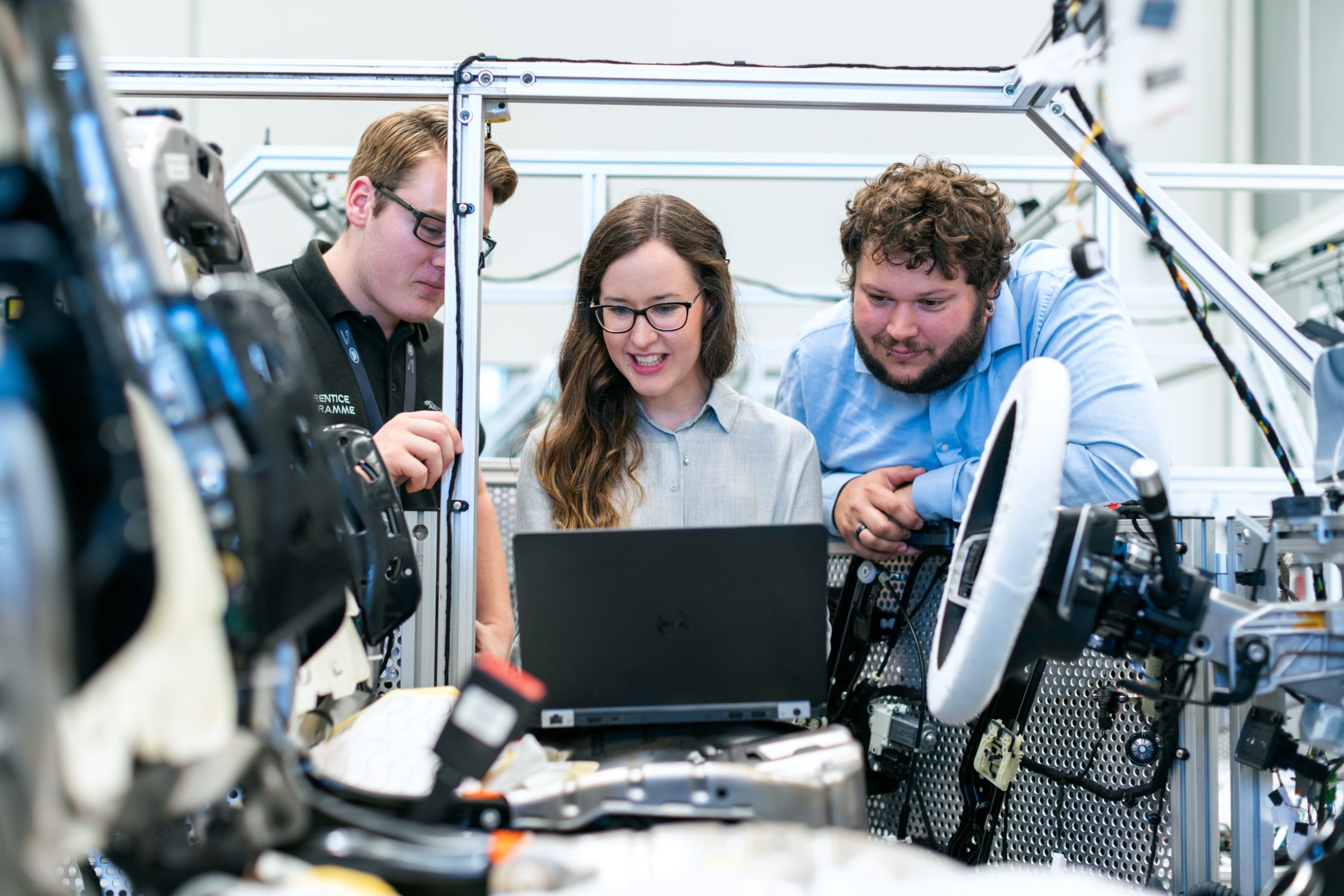
This is what operational intelligence actually looks like
Not a chatbot. Not a search tool. Not another retrieval layer on top of a data graveyard.
A reasoning system that works with your operational data as it actually exists — messy, incomplete, distributed across systems — and surfaces the patterns, root causes, and institutional knowledge buried inside it. Transparently. Auditably. On infrastructure you control.
The intelligence was always there. It was just inaccessible.